To enter a new myth is a moment of initiation. One must return to the moment before myth, when the myth of anyone might still become the myth of any other. It is to enter the room which is both tomb and womb, to become innocent of everything except the motivation for myth. – Maya Deren, avant-garde film-maker
Genres: Psychology/Bipolar, Metaphysical, Religion, Mythology, Medical Memoir
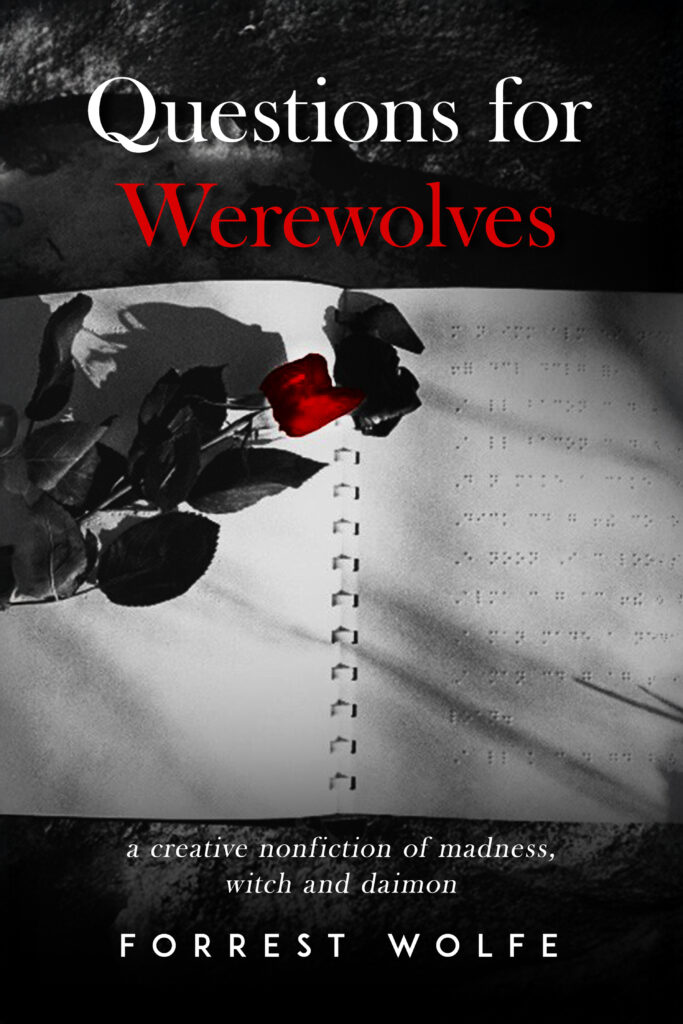

Publication by Running Wild / RIZE Press in May 2026.
QUESTIONS FOR WEREWOLVES is an odyssey of bipolar depression, inspired by Greek underworld myths and world religion. It is an intimate and poetic chronicle of a mind undone — and remade — through myth, madness and the search for the sacred.
In 1998, while I am working on a film in Los Angeles, mysterious omens and voices begin to invade my everyday life. When I hear about the murder of a stranger in my hometown. I’m gripped by the premonition of the death of a woman I once knew. My sanity collapses. But the wild voices and the depression never go away. I put my faith in these voices and follow the gods. A wolf appears as a dream guide.
I travel as a stranger across cultures and continents, to seek out the Black Virgin, the enigmatic madonna of many names. Here, my voices ferment in our common shadows, doubts, and visionary religious mystery. Blending with world religion, the Greek myths may become song-lines into dream time. Through the white fire of their divine names — Persephone, Artemis, Dionysos and others — to seek and find the daimon.
This is an intimate testimony to the soul’s mystery that meets us in depression and bipolar depression. It explores openings in personal and ancestral memory to our visions and voices that speak to the most lunar, spiritual yearnings of the heart — for divine love and indestructible life.
Early Praise
“In his Questions for Werewolves Forrest Wolfe explores the spiritual, cultural and mythological lands we have inhabited since ‘illud tempus’, the realm of sacred time. Through a haunting polyphony of voices and fragments, the author connects to the layers of dreams, melancholia and madness hidden in all of us, and shows how these shape our relations to real and imaginary others. Highly advisable for those who search for words and a landscape where their dark thoughts and intuitions may resonate.”
—Wouter Kusters, author of A Philosophy of Madness: The Experience of Psychotic Thinking
“Question for Werewolves: A Creative Non-Fiction of Madness, Witch and Daimon,” is a text fit for night-reading, when all the world is sleeping and the soul has the will to want to wander. Published in May 2026 by Running Wild & RIZE Press, Forrest Wolfe presents a brave and deeply original memoir that traces a pilgrimage through bipolar depression.” https://www.sarahailstone.com/book-reviews/questions-for-werewolves-book-review
—Sara Hailstone, author of Wretched (2025)
Table of Contents
Black Light
the emperor
black veils
the loups garous
the minotaur
unspeakable
nameless continent
persephone
The Black and the White
a comedy of saints
the names
grand cemetery
war of light
how dark thoughts came into the human heart
hell’s gate
the baron
the year that ends in one dark day
The Black Virgin
the palmistry of wood
white fire
lost city
the star
the daimon
epilogue: depression and shamanic themes